Full Tang vs Partial Tang Knives – Why It Matters
When buying a kitchen knife, most people focus on the blade, but one important detail often gets overlooked—the tang. Understanding full tang vs partial tang knives can make a big difference in performance, durability, and safety.
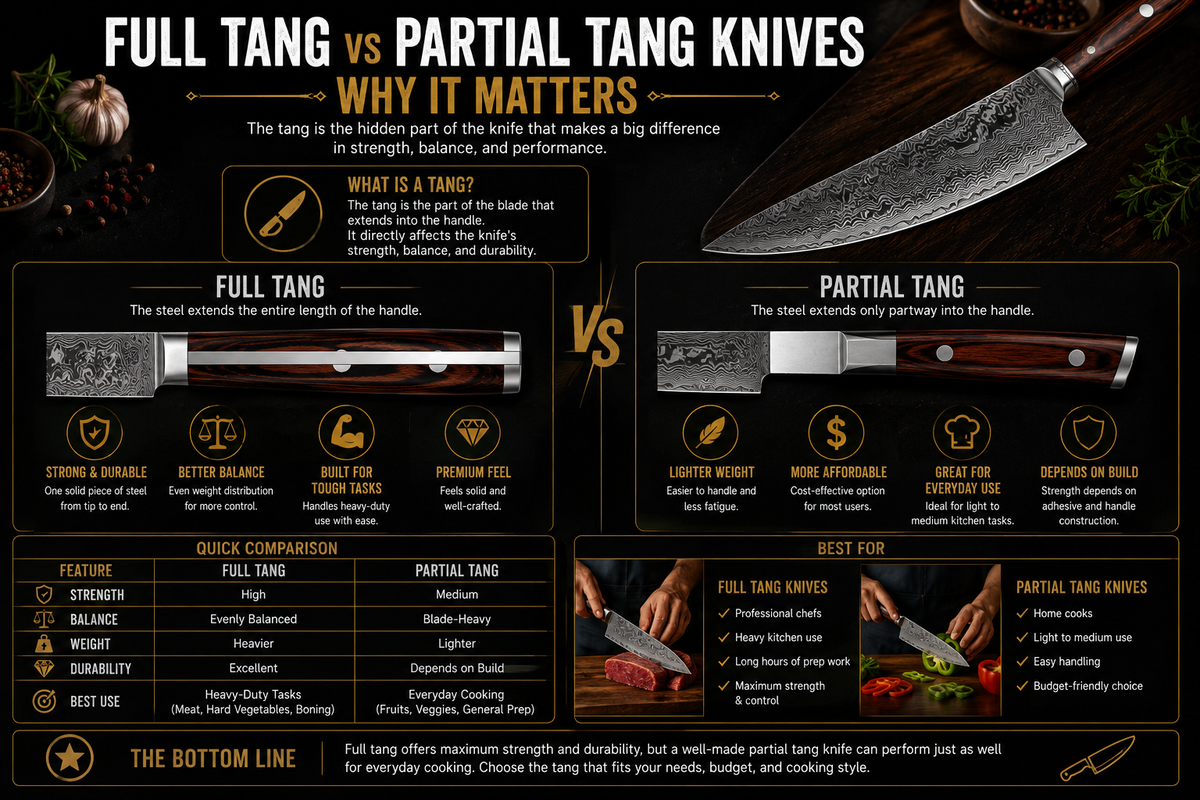
In simple terms, the tang is the part of the blade that extends into the handle. It plays a key role in how strong and balanced a knife feels during use.
What Is a Knife Tang?
A knife tang is the portion of the blade that continues inside the handle. It connects the blade to the handle and supports the knife during cutting tasks.
The size and shape of the tang directly affect:
- Strength
- Balance
- Durability
- Control
This is why understanding tang types is essential before buying any knife.
Types of Knife Tang (Full Tang vs Partial Tang)
There are two main types of knife tang:
- Full tang
- Partial tang
Each type offers different advantages depending on how the knife is used.
What Is a Full Tang Knife?
A full tang knife has a blade that extends through the entire handle, from the tip to the end.
You can often see the metal running along the handle edges, usually secured with rivets.
This design makes the knife stronger and more stable.
Advantages of Full Tang Knives
- Better balance and control
- Increased strength and durability
- Less likely to break under pressure
- Ideal for heavy-duty tasks
A chef knife full tang is commonly used in professional kitchens because of its reliability.
Disadvantages of Full Tang Knives
- Slightly heavier than partial tang knives
- Usually more expensive
- Can feel bulky for some users
Despite these drawbacks, they are preferred for long-term use.
What Is a Partial Tang Knife?
A partial tang knife has a blade that only extends partially into the handle.
The tang may be shorter or narrower, and it is often hidden inside the handle.
This design makes the knife lighter and easier to handle.
Advantages of Partial Tang Knives
- Lightweight and easy to use
- More affordable
- Suitable for light cutting tasks
They are a good option for beginners or occasional use.
Disadvantages of Partial Tang Knives
- Less durable
- Can break under heavy pressure
- Reduced balance and control
For demanding kitchen tasks, partial tang knives may not perform as well.
Full Tang vs Partial Tang (Quick Comparison Table)
|
Feature |
Full Tang Knife |
Partial Tang Knife |
|
Strength |
Very strong |
Moderate |
|
Balance |
Excellent |
متوسط |
|
Durability |
High |
Lower |
|
Weight |
Heavier |
Lightweight |
|
Price |
Higher |
Affordable |
|
Best Use |
Heavy-duty tasks |
Light tasks |
How Tang Affects Knife Performance
The tang plays a major role in how a knife performs.
- Full tang improves stability and cutting power
- Partial tang reduces weight but sacrifices strength
A well-balanced knife allows better control and safer cutting.
Why Professional Chefs Prefer Full Tang Knives
Professional chefs often choose full tang knives because they need tools that can handle continuous use.
Benefits for chefs:
- Better control for precise cuts
- Stronger construction for heavy tasks
- Long-lasting performance
In fast-paced kitchens, reliability is essential.
OSERM Full Tang Damascus Knives Overview
OSERM offers full tang Damascus knives designed for strength and performance. These knives combine layered steel blades with full tang construction to provide better durability and balance.
When compared to basic knives, full tang Damascus designs offer improved cutting control and long-term reliability.
When Should You Choose a Full Tang Knife?
Choose a full tang knife if:
- You cook frequently
- You need a durable and strong knife
- You perform heavy cutting tasks
It is a better long-term investment for serious users.
Conclusion
The choice between full tang and partial tang knives depends on your needs. Full tang knives offer better strength, balance, and durability, making them ideal for regular use and demanding tasks. Partial tang knives are lighter and more affordable but are better suited for light-duty work.
If you want long-term performance and reliability, a full tang knife is usually the better choice.
FAQs
What is the difference between full tang and partial tang knives?
A full tang knife has a blade that runs through the entire handle, while a partial tang only extends partway into the handle.
Are full tang knives better for cooking?
Yes, they provide better balance, strength, and control, making them ideal for most kitchen tasks.
Are partial tang knives less durable?
Yes, they are generally less durable and more likely to break under heavy use.
Why do chefs prefer full tang knives?
Chefs prefer them because they offer better stability, durability, and performance in demanding kitchen environments.
Is a full tang knife worth the extra cost?
Yes, it is worth the investment if you want a strong, reliable, and long-lasting knife.